
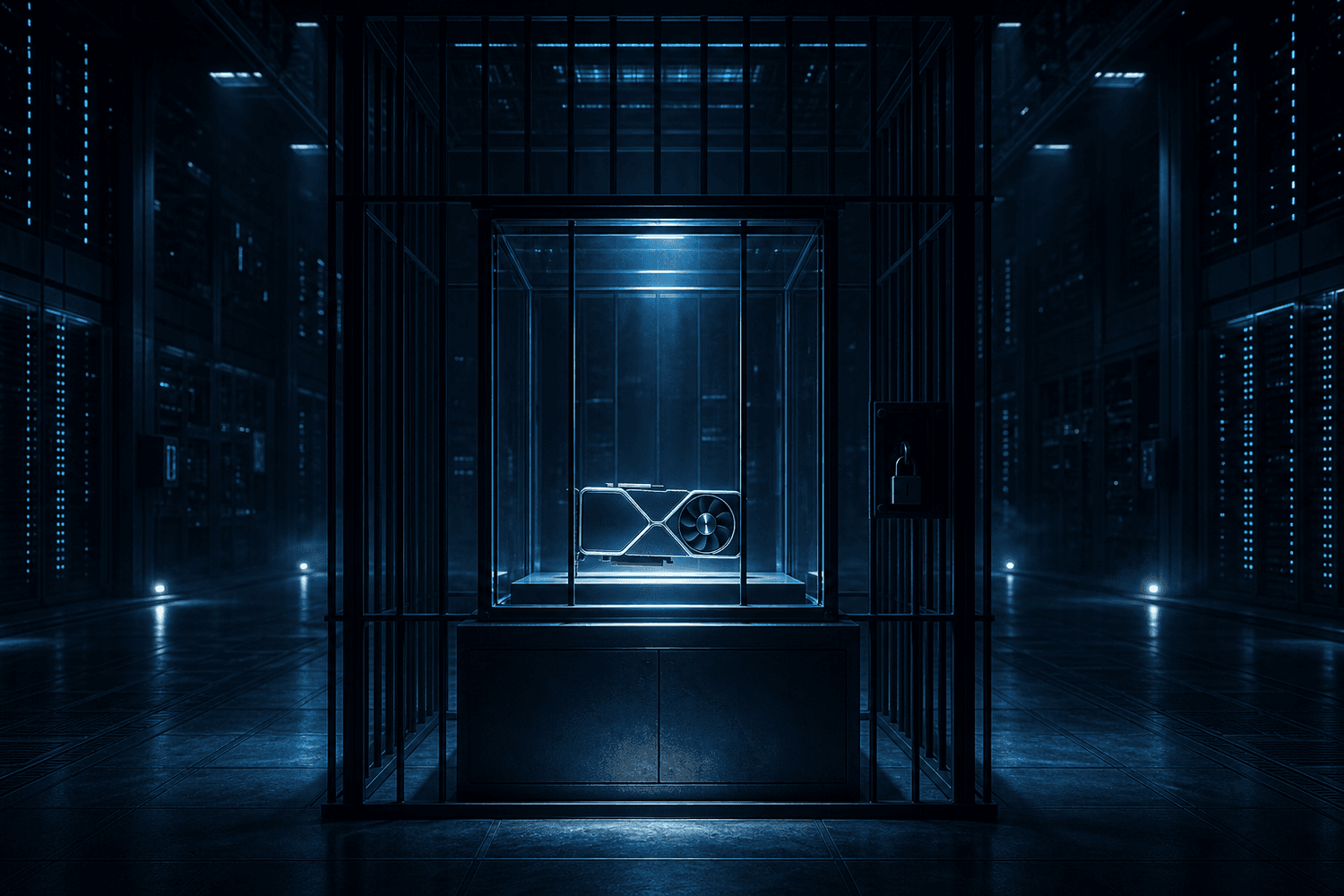
We spent two months trying to rent GPUs.
Not buy. Rent.
We're a multi-year paying customer of both Amazon's and Google's clouds. We had the money ready.
It almost didn't matter.
Here is what getting compute actually looks like in Canada right now - the part nobody tells you until you live it.
First, why we even need them
I run SimpleDirect®. We fine-tune open models into specialists - AI that's genuinely good at one profession's work instead of being a little bit good at everything.
The generic models are extraordinary. Opus, GPT - all of them.
But ask one to do your specific job, in your specific way, and it stalls.
I load my own writing style into a top model and still spend twenty minutes wrestling it back into sounding like me.
To close that gap, you fine-tune.
To fine-tune, you need GPUs.
That is where the wall is.
Money is not the constraint
Most developers assume compute is a pricing problem. "Just call AWS, you have the budget, buy the GPUs."
We tried. We've been their customer for years. We have no meaningful quota.
Inside each cloud there is effectively one person - sometimes a small team - who decides which company gets to reserve chips and which gets zero.
Right now that is one of the quietest, most powerful jobs in technology.
They can decide you get ten. They can decide I get nothing. There is no appeal.
We escalated. We sent proof of funds, verified the company, asked them to push it up the chain.
A month went by. Same place we started.
Then the strangers showed up
I posted my frustration on LinkedIn - that Google's Canadian region had nothing newer than a 2017-era chip. No A100s, no H100s, no H200s.
Hundreds of people slid into my inbox.
"George, we have the chips."
Almost all of it was a scam.
Plenty claimed to be in the US but couldn't name a company you could actually verify.
The few who were real quoted prices that made me wince. One major provider's math came out to $14,000 a week. Just to rent.
How it actually got solved
A major Canadian telecom reached out.
They work directly with Nvidia, their inference hardware is relatively new, and they had a few H200s to reserve.
They're effectively sold out now.
That - not the hyperscalers everyone names first - is the only reason we have chips today.
The number that should bother you
One Google data center in Iowa holds more GPUs than all of Canada.
Google's Canadian footprint is two regions, Toronto and Montreal. Amazon is similar. In the US the server regions blanket the country.
So if you're building here, "access" isn't something you can buy.
It's a capacity-allocation decision made somewhere else, under someone else's constraints.
That's fine right up until their constraints stop matching yours.
Why almost nobody here attempts this
We only got to try because our last company made money.
We were in fintech, and we still earn from a SaaS business we wound down. That cushion is the only reason we could absorb the cost.
Companies in San Francisco raise $18 million - sometimes hundreds of millions - just to afford compute.
We're doing comparable work bootstrapped, with essentially no leverage.
Most founders here can't even start. That isn't a talent gap. It's a capital gap.
What we do with the chips
We burn real money on those H200s every month, so the priority is simple: don't waste them.
What surprises me most is how much a small model can do.
We've been running a 4-billion-parameter model - a rounding error next to the trillion-parameter frontier - and it handles real work at a fraction of the price.
Everything we learn ships open weight and open source at getsimpledirect.com. Datasets, methods, the lot.
Not because it's charitable.
Because the next bootstrapped team shouldn't have to spend two months learning what we just did.
The takeaway
Canada's AI strategy is moving in the right direction. It will not change the chip math in the short term.
Data centers take three to five years to build. Here, maybe six.
So for now, if you're not American, you're mostly renting someone else's compute - and quietly accepting that someone you will never meet decides whether you get any.
That is the problem we're building to fix.
One downloadable model at a time.