
In December 2025 I killed my own SaaS product because AI made it obsolete.
Then I looked at my portfolio.
I was still holding broad index funds, which meant I owned hundreds of SaaS companies I would never have bought on purpose. I had just watched, up close, how fast AI eats a software business. And I was betting my savings on those same businesses surviving.
That was the moment the thesis clicked. A few weeks later I rebuilt the whole thing.
This is not financial advice. It is my reasoning, in the open. You can disagree with all of it.
The five things I now believe
AI is real, and the market is still pricing it through the old lens. Not hype, not a bubble. A repricing of what value even is.
Energy is the binding constraint. Every model runs on electricity, and data center power demand is on track to roughly double by the end of the decade. You cannot prompt your way around a power plant.
Infrastructure beats software. SaaS margins look beautiful right up until the product can be replicated by a good model. Physical-layer businesses cannot be copied with a sentence.
The old indexes are not as safe as they feel. A huge share of a standard index is a handful of mega-cap names, and another chunk sits in exactly the sectors AI is about to restructure. Passive stopped being neutral.
Cash is a position. Patience is a weapon during a structural transition. You deploy with conviction, not urgency.
What I actually changed
Before, I owned a small number of broad index funds and called it a strategy. The strategy was, more or less, do nothing.
Doing nothing is a great strategy in a normal market. This is not a normal market.
After, I hold a concentrated set of positions, and I can explain each one in a single sentence. If I cannot articulate why I own something, I should not own it.
Three shifts sit underneath that.
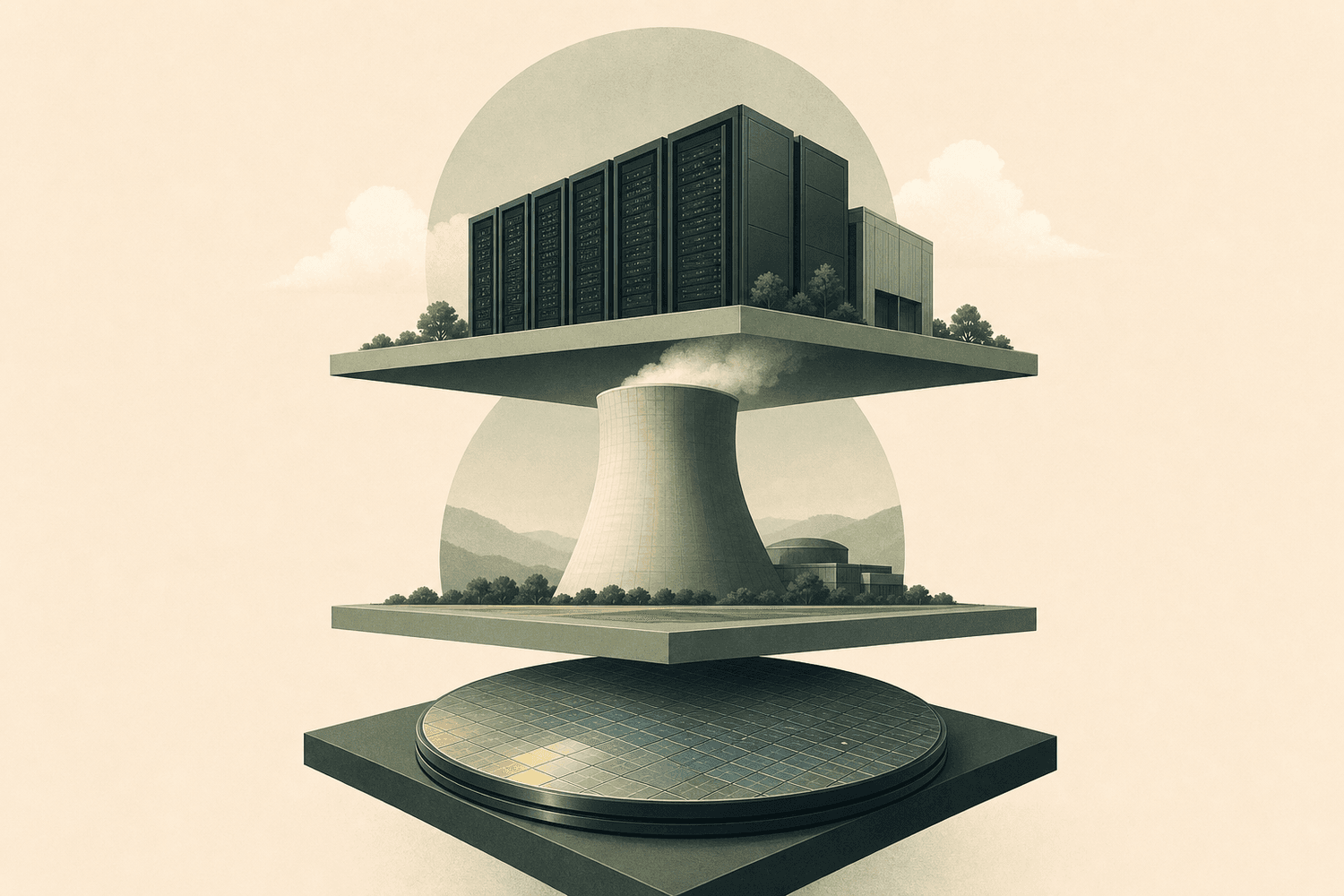
I went from broad diversification to concentrated bets on the AI supply chain - the silicon, the manufacturing bottleneck, the networking.
I went from zero energy exposure to a real weight in nuclear and power generation, because the companies that generate and fuel compute have pricing leverage software never will.
And I moved from a software-and-services tilt toward physical infrastructure and real assets. Data centers, uranium, power. Things that are hard to build, and therefore hard to arbitrage to zero.
Why I hold cash on purpose
The uncomfortable part of conviction is patience.
If you believe a transition is repricing whole industries, you also have to believe some of that repricing has not happened yet. Cash is how you stay ready for it. It is not indecision. It is a position with an option attached.
The honest caveats
I am not running a fund. I am not selling a course. There is no subscription gate on any of this.
But this is a concentrated, actively managed portfolio, and it carries more risk than owning the whole market. Past performance guarantees nothing. I may buy or sell any of it at any time, and I will change my mind if the facts change.
I am sharing the thesis, not the ticker list frozen in amber - the specific holdings and weights move, and the point was never to copy them. The point is the reasoning: when you have seen AI destroy a business from the inside, you stop being able to pretend your index does not own a thousand of them.