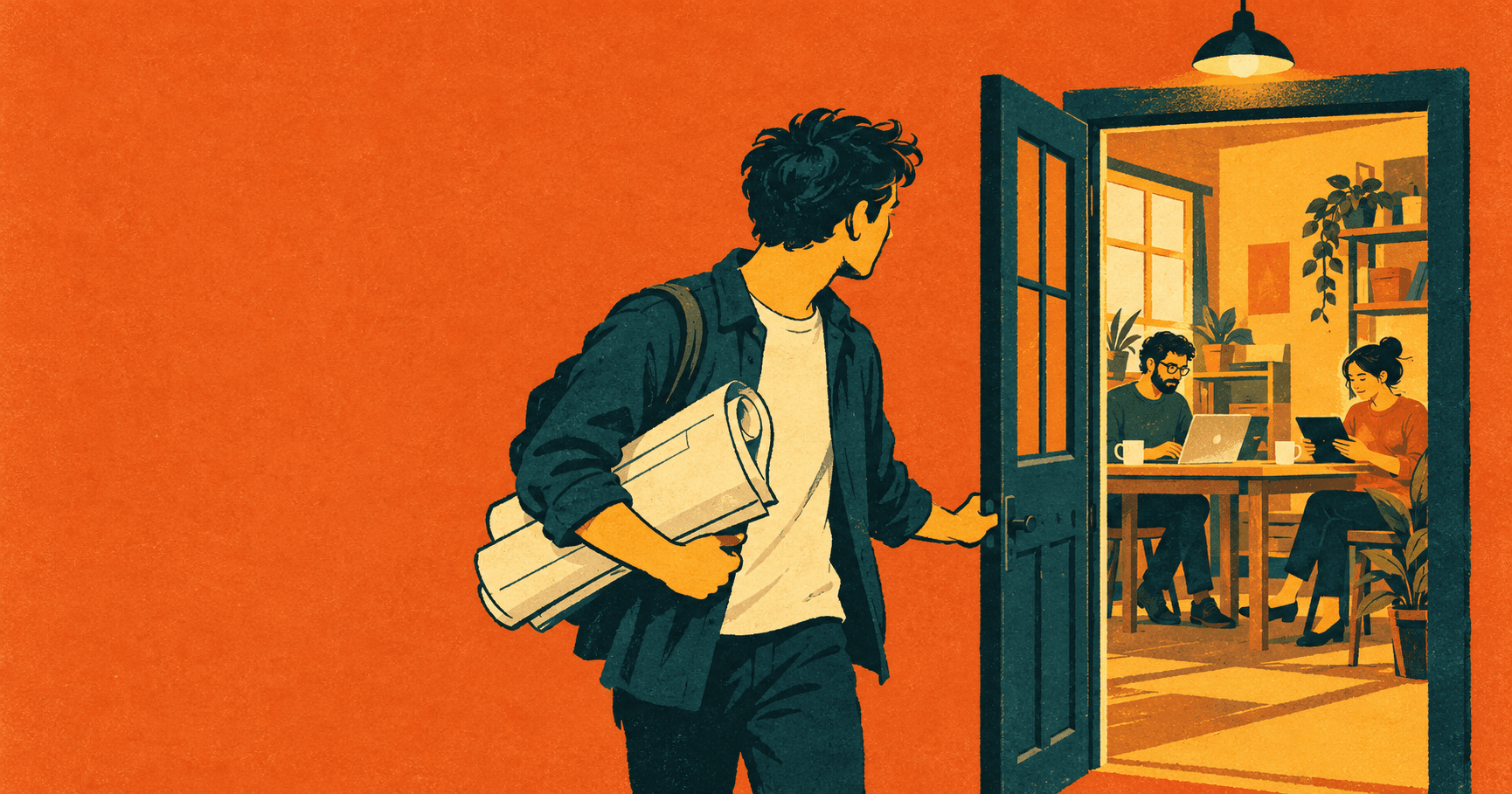
There are two people who use Vinci every day. I keep thinking about them.
One keeps emailing me useful feedback. Both keep coming back to something we built.
Meanwhile, I'm figuring out where the company goes next.
I don't have a clean way to hold both of those at once. The product can still feel early to me and already be part of someone else's day.
It was a soft launch
We built Vinci Chat, plus mobile and desktop apps. I think we built them well. I cared about the product, including the idea that people deserve more privacy and transparency in their relationship with AI. That was part of the point.
No big launch. I shared it on my own X, LinkedIn and YouTube. A few hundred people came in, including people who already follow my work. It was free.
To me, it was still early. Things to learn. Things to fix. Open questions about what it should become.
Then, pretty fast, I was looking at decisions that could change the product, the pricing and how much inference we could keep subsidizing.
To a founder, that sounds like normal company building. You ship, you learn, you rethink where the time and money go.
But people had already shown up. Some stayed.
When I think about those two daily users, I can't keep this at the level of strategy. Someone made room in their day for a thing I asked them to try.
They keep coming back. That's reason enough to take them seriously.
Free still costs people something
Them not paying makes this harder to talk about.
There's no subscription to point to as the start of the relationship. There's the time they spent trying it, learning it and choosing to come back. There's the feedback someone bothers to write when they could just leave.
I asked for that attention through channels where people know me. They weren't reacting to a product listing. Some of them gave it a shot because I built it.
I feel responsible for that.
Obviously a free product has limits. The money and time to run it have to come from somewhere. I can't treat the company's ability to support it as unlimited, and pretending otherwise wouldn't help the people using it.
But "they don't pay" can't carry the whole argument for whatever happens next.
You can pay nothing and still have invested something real. If you have to switch tools, that costs you time too. From my side it's a change in product direction. From theirs it's one more thing to sort out.
That's easy to miss when you're the one deciding.
I can call something "early" for as long as I'm unsure about it. Someone who opens it every day gets nothing from that word. They need it to work when they come back. I can be unsure about the long-term product and still own the fact that I asked people to use it today.
A week is long from the other side
Two or three weeks ago, Vinci had an inference bug. It took me about a week to get it fixed.
I was swamped. That's the explanation, and I still feel bad about it. Being busy doesn't give that week back to the people who hit the problem.
We fixed it. What stuck with me is how long it took.
How much attention am I actually giving a product people use every day?
I can genuinely care about these people and still leave them waiting while other work jumps the queue. The week it took is more real than my feeling that the product matters.
Feeling bad doesn't tell anyone what to expect next time. I have to look honestly at how much attention the product actually gets, even when something else feels more urgent.
Nobody decides to be careless. The gap just opens up. I still own it when it happens in something I run.
I've been here before
The old SimpleDirect fintech business is why I can't write this off as an early-AI-product problem.
Small home-improvement businesses in the Midwest and the South of the US relied on what we built. Real businesses with real work to do. Our decision about the company's direction didn't make their need go away.
I want to be precise about that history, because some of my earlier writing made it sound like everything disappeared overnight. It didn't.
As I clarified in the AI Displacement series, we decided to sunset the fintech business around December 2025. The official pivot came around June 2026. Customers got two years to transition, and the app stayed available and online.
I also made it free, because we weren't actively maintaining and supporting it the way we used to.
That didn't make it ideal. Being online is only part of what people rely on. There's also the attention behind the product, the response when something breaks and knowing what happens next.
The transition time mattered because people needed room to find another way to do their work. My decision couldn't become their finished transition on the same day.
I'm not telling this to prove I got everything right. It's a reminder that when you move a company in a new direction, you leave work behind. And some of that work belongs to people who never made the decision with you.
Where I'm leaning
With Vinci, I've decided I want to give people at least a year to find their footing.
I'm still leaning toward leaving their existing arrangements in place and continuing to improve the product, instead of making them absorb a sudden change while I figure out what's next for the company.
I haven't settled the exact timing or scope yet.
There are real questions inside that. What can we actually maintain well? Which improvements help the people already here? How do I keep it useful without implying every part of the original direction lives forever?
I don't have all of those answers yet.
What I do have is a stronger sense that the people already using it deserve a place in the decision. They can't just be whatever a usage number says about the product's future.
A few hundred users is a rounding error in a growth story. It's harder to talk that way when one of them wrote you a thoughtful email and two of them come back every day.
I still have to move forward
I don't think the answer is that founders keep every product alive forever.
Companies change. Sometimes the first idea doesn't work. Sometimes a small team's resources belong somewhere else. Sometimes continuing to promise the old direction is less honest than admitting the company has moved.
I still have to make those calls. Vinci has work ahead of it that I care deeply about. Caring about current users doesn't get me out of choosing.
What I struggle with is what should survive the choice.
How much time do people need? How much support can I honestly stand behind? What's a fair transition when the product was free, when people joined because they trusted me and when I'm still learning what they came to rely on?
I'd love for those questions to produce a clean rule. So far they haven't.
I keep thinking about those two daily users. One of them took the time to tell me how to make the product better. There's something uncomfortable about getting that kind of attention from someone while I'm deciding how much of mine the product gets.
If you've had to move on from a product people still depended on, I'd genuinely like to hear what you did. Including what you wish you'd done differently.
I'm still working out what I owe the people who stayed.